

A behind-the-scenes look at launching a podcast in the middle of a blizzard, a school vacation week, and a full-blown identity reckoning.
Let me set the scene.
Two snowstorms. One week of school vacation immediately preceding said snowstorms. A cold I couldn’t shake. Four kids. And somewhere in the middle of all of that — a podcast launch.
Not ideal conditions. Also, apparently, exactly the conditions I needed.
Because here’s what I’ve learned about myself after 51 years, a late ADHD diagnosis, and more fresh starts than I care to count: I don’t do things when the moment is perfect. I do them when the moment is real. And this moment — chaotic, imperfect, slightly feverish — was very, very real.
Done Is Better Than Perfect. Except When It Isn’t. Except When It Is.
I want to talk about that phrase for a second, because I have a complicated relationship with it.
On one hand: yes. Absolutely. The podcast that exists is infinitely more useful than the podcast I was going to make someday when everything was lined up perfectly. Someday is not a calendar date. Someday is where good ideas go to die.
On the other hand — and I’m being honest with you here — I am genuinely proud of this podcast. Not in a “thank you for participating” ribbon kind of way. In a this-is-real-work-that-required-real-excavation kind of way. Finding your voice on a microphone is not a casual undertaking. It requires you to unmask. To reach for your actual values instead of the performance of them. To be simultaneously yourself and for an audience, which is a specific kind of high-wire act that I did not fully appreciate until I was standing on the wire.
If you have ever wanted to do unmasking work — the deep, uncomfortable, clarifying kind — I have a suggestion: start a podcast. You will find out very quickly what you actually think, what you actually believe, and which version of yourself shows up when there’s nowhere to hide.
About That First Episode
I’m going to be straight with you. Episode one is not my best work.
It’s not bad. But it’s not great. And I’ve made peace with that, because here’s the thing about telling your own story when you’re 51 years old: there is simply too much of it.
Ballet for eighteen years. Four industries — fashion, film, advertising, interior design. Two of the greatest cities in the world. A fundamentalist religion I had to escape. Two parents gone. A brother, tragically. Friends lost and found. Heartbreak that I now understand was significantly shaped by an undiagnosed neurological difference. And oh — a rather famous job that they keep making movies about, which I have deeply mixed feelings about in the way that the guy from The Sound of Music probably had mixed feelings about being forever defined by do-re-mi. (I used to think he was ungrateful. I get it now.)
There was no way to tell all of that in thirty minutes. So I told a peripheral version. The shape of the story without the whole story. Think of it as the trailer for a memoir I haven’t written yet — working title: Out to Lunch: The Half Life. Coming soon. Kidding. I don’t have a book signing yet.
The full story is coming. In pieces, over time, as this podcast finds its form.
Episode Two Is Where Things Got Interesting
Episode two — on masking — is genuinely good. And I say that not to brag but because I want to explain why, because I think it’s instructive.
It’s good because I’m actually baffled by masking. Not performing bafflement — genuinely, intellectually consumed by the question at the center of it: how can the person wearing the mask not know they’re wearing it?
That question keeps me up at night in the best possible way.
Here’s the image I keep coming back to. Imagine a pot of rice cooking on high heat. The rice is doing what rice does — boiling, expanding, full of energy. But there’s a lid on it. The person holding that lid down is the masker. They’re working constantly to keep things contained, to keep the too-muchness in check, to make sure nothing boils over in a way that makes the room uncomfortable.
And they do it so automatically, so fluently, that they stop noticing they’re doing it at all. They adapt to rooms. They shift energy. They people-please and modulate and calibrate — and somewhere along the way they forget what it felt like to just be them, without the lid. That forgetting leads to exhaustion. The exhaustion leads to anxiety. The anxiety starts to look like a personality trait instead of a symptom. And nobody — not even the woman holding the lid — connects it back to the rice.
That’s masking. And that’s why it matters.
Episode Three Surprised Me
I’ll be honest — episode three felt easier than either of the first two. And I think I know why.
I’m starting to find my format. I’m learning how to give out information without being a boring snore — how to cover real intellectual ground while still telling a story that hooks you. How to make something that is genuinely useful also genuinely listenable.
I don’t expect to hit my full stride until around episode ten. That’s not false modesty — that’s just how this works. Ten episodes in, you can’t go back. You’re committed. You’re in the middle of the ocean with both shores out of sight, and the only option is to keep rowing.
(More on that metaphor in an upcoming episode. It involves a 25-year-old woman from Nebraska who rowed solo across the Atlantic and has approximately everything to teach us about ADHD and the middle.)
Here’s What I Want You to Know
Launching this podcast was scary. Not in a skydiving way — in a quiet, sustained, what-if-nobody-cares and what-if-I-can’t-do-this way. The kind of scary that doesn’t announce itself dramatically. It just sits in your chest during the school pickup line.
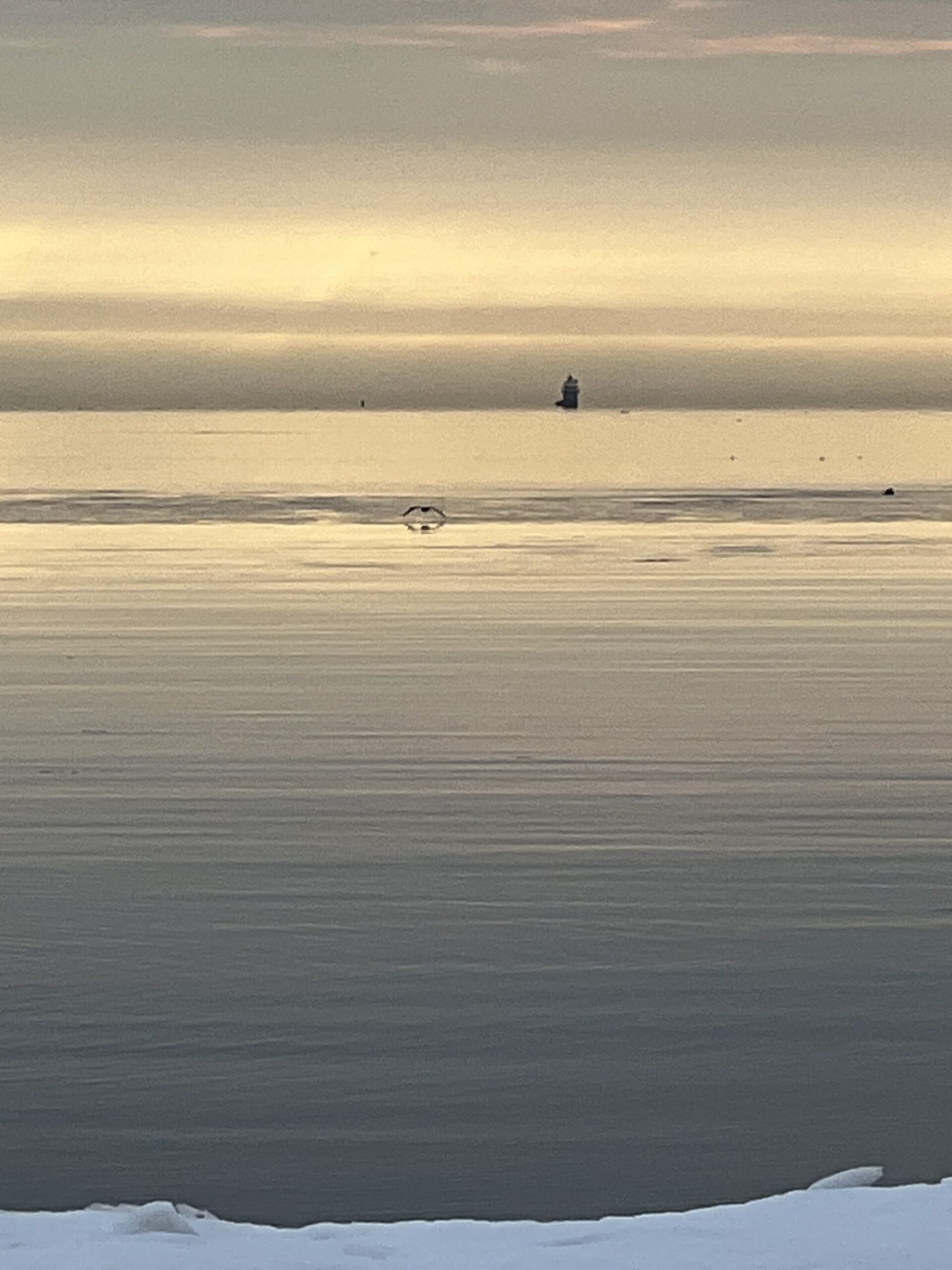
I did it anyway. In a blizzard. With a cold. With kids underfoot and the Atlantic flat as glass outside my window and a very clear sense that this was the right thing even when it felt like the hard thing.
We can do scary things that count. That’s the whole point.
The podcast is out there now and I have to let go of it — which, if you know anything about ADHD and perfectionism, you’ll understand is its own kind of work. It’s not perfect. It’s real. And real, I’ve decided, is better.
I hope you’ll listen. I hope something in it makes you feel less alone. And I hope you’ll share it with a woman who might need to hear it.
That’s why it’s there.
— Libby
Listen To CORE WITH LIBBY ANDREW on Spotify Here.
CORE with Libby Andrew is available now wherever you listen to podcasts.
New episodes weekly. Find out more at libbyandrewstudio.com





Comments +